
IN MEMORIAM: MASARU TAKIGUCHI (1941-2026)
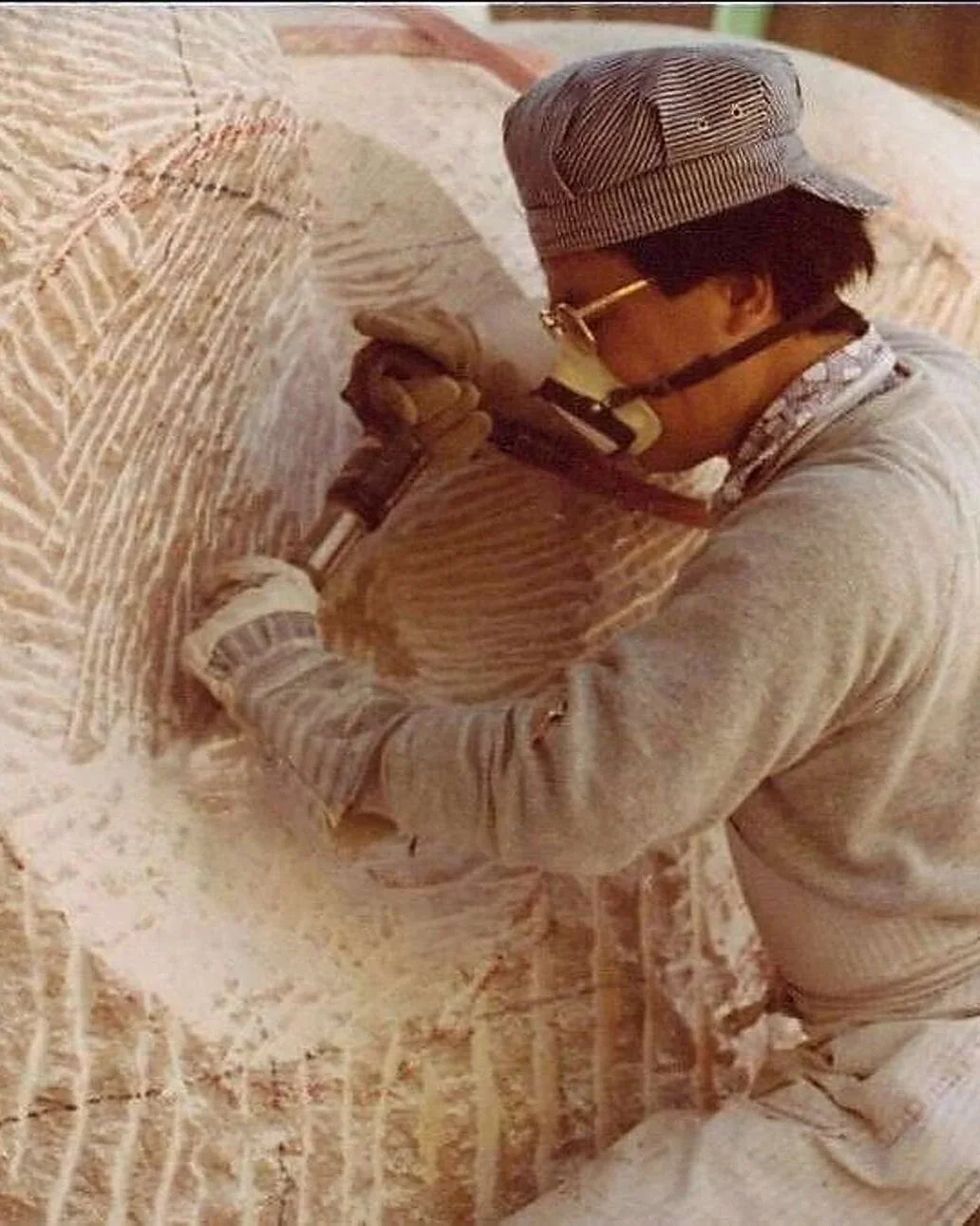
image courtesy of Hooks-Epstein Galleries
The Japan-America Society of Houston (JASH) mourns the passing of Masaru “Taki” Takiguchi, a longtime JASH member and distinguished sculptor whose life and work enriched Houston’s artistic and cultural landscape for more than half a century.
Born in Osaka, Japan, in 1941, Takiguchi studied sculpture at Kyoto City College of Fine Arts before coming to Houston in 1968. What began as an artistic opportunity became a lifelong connection to the city. Houston became the place where he built his career, established his home, met his wife, Hiromi, and became an integral part of the city's arts community.
Working primarily in stone and wood, Takiguchi developed a sculptural language distinguished by its simplicity, precision, and extraordinary sensitivity to material. He often worked alone, using tools he made himself, allowing the natural character of stone and wood to guide forms that could be both monumental and remarkably contemplative.
His influence extended well beyond his own body of work. As an instructor in sculpture at the University of Houston, Takiguchi helped shape a generation of artists. Among his students was the celebrated Texas sculptor Jesús Moroles. Takiguchi's own works entered public, corporate, and private collections, with several sculptures in the University of Houston System's public art collection and his monumental Quest, carved from a 15-ton block of marble, prominently installed at Austin College in Sherman, Texas.
For JASH, Takiguchi-san was more than an accomplished artist. He was a longtime member and friend whose life reflected the cultural exchange and mutual understanding at the heart of our mission.
In 2015, JASH was honored to feature his work in I am Content With What I Lack: The Poetics of Japanese Gardens, an exhibition bringing together Takiguchi and fellow Houston-based Japanese artists Keiji Asakura, Terry Hagiwara, and Mari Omori. Through their individual perspectives, the artists explored the relationship between Japanese aesthetics, nature, place, and the idea of the garden. The exhibition resonated so strongly with audiences that its run was extended.
Takiguchi-san's journey from Osaka to Houston became something much larger than a story of an artist making a home in a new city. Through more than five decades of creating, teaching, and quietly influencing those around him, he became part of Houston's cultural fabric and helped deepen this community's appreciation of Japanese art and aesthetics.
His legacy remains in the works he created, in the artists and students he influenced, and in the many people who had the privilege of knowing him.
JASH extends its deepest condolences to his wife, Hiromi, his family, friends, fellow artists, and all those whose lives were touched by his artistry and friendship.
We remember Takiguchi-san with profound respect and gratitude—for the beauty he created, for the generations he influenced, and for the enduring bridge he built between Japan and the Houston community.